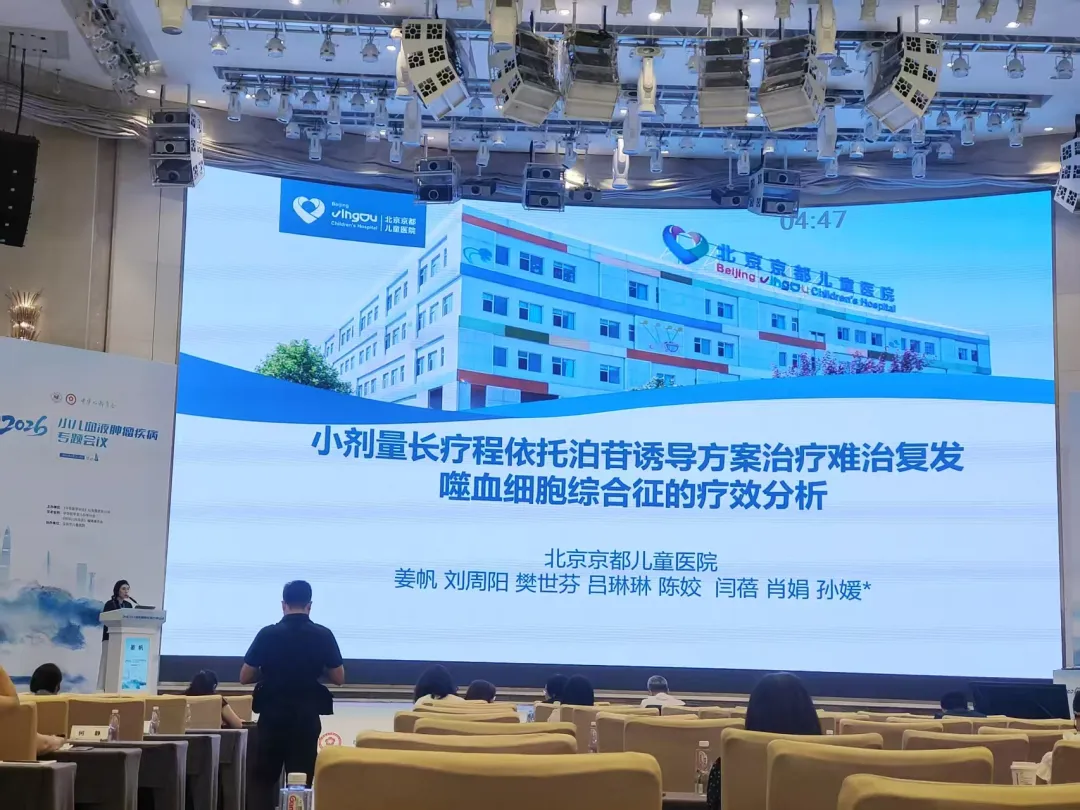
Why Children's Blood Disorders Need a Dedicated Center
Blood diseases in children are not simply adult diseases in smaller bodies. Many of them are rare, and each behaves differently in a child who is still growing. A single diagnosis can call for chemotherapy, immunotherapy, stem cell transplantation, and long-term supportive care at the same time.
That is why outcomes for children with serious blood disorders depend so heavily on how often a center has treated the exact condition. Rare diseases are only familiar to teams that see them regularly — and the difference shows up in how quickly a diagnosis is made, how precisely treatment is chosen, and how well complications are managed.
Beijing Jingdu Children's Hospital's Hematology and Oncology Department was built around that idea: bring the laboratory, the ward, and the transplant unit together, so that children with the most difficult blood and immune diseases can be diagnosed, treated, and followed up in one place.
The Department at a Glance
The department is one of the hospital's key specialties and is organized as a complete care system rather than a single ward.
- Two general wards: Ward 7, for solid tumours, and Ward 8, for transplantation and general blood disorders
- Two dedicated transplant units
- 19 ISO Class 5 cleanrooms, the highest cleanliness class used for transplant patients
- 150 beds in total
- A central laboratory, a hematology outpatient clinic, a PICC clinic, and a comfort-care treatment room
Alongside these clinical facilities, the department holds several national roles: it is a designated stem cell transplantation center under Beijing's basic medical insurance, a partner hospital of the China Marrow Donor Program for unrelated donor transplantation, the lead unit of a national multicenter research group on stem cell transplantation for hemophagocytic lymphohistiocytosis, and the lead unit of a national collaborative group on autologous cord blood transplantation for acquired aplastic anaemia.
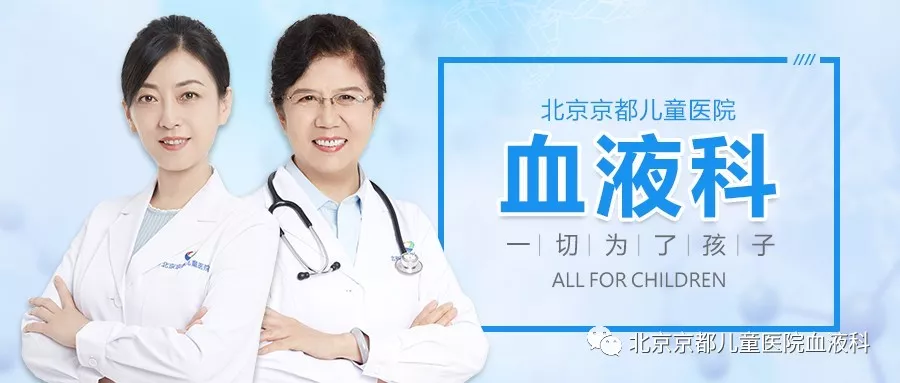
Jingdu's Hematology and Oncology Department — one of China's largest pediatric transplant centers.
What We Treat: A Plain-Language Glossary
"Blood disease" covers a very wide range of conditions. Below are the main groups the department treats, explained in everyday terms.
Cancers of the blood and lymph system
Leukaemia and lymphoma are cancers of the cells that form blood and the immune system. The department treats newly diagnosed, high-risk, and relapsed or refractory cases, including children who have already not responded to standard treatment.
Hemophagocytic lymphohistiocytosis (HLH)
In HLH, immune cells become over-activated and attack the body's own blood cells and organs. It can be inherited or triggered by an infection. Without treatment it progresses quickly, and stem cell transplantation is often the only cure.
Chronic active Epstein-Barr virus infection (CAEBV)
Most children infected with Epstein-Barr virus recover within weeks. In a small number, the virus stays active and keeps driving inflammation and organ damage. This persistent form is rare and needs specialist, long-term management.
Bone marrow failure
In these diseases the bone marrow stops producing enough healthy blood cells. They include acquired aplastic anaemia, Shwachman-Diamond syndrome, Fanconi anaemia, congenital neutropenia, Diamond-Blackfan anaemia, and dyskeratosis congenita.
Primary immunodeficiency
These are inherited defects in the immune system. Children may suffer repeated severe infections, or immune reactions that damage their own body. Examples include Wiskott-Aldrich syndrome, severe combined immunodeficiency, very early onset inflammatory bowel disease, hyper-IgM syndrome, hyper-IgE syndrome, and chronic granulomatous disease.
Inherited metabolic disorders
Some metabolic diseases can be treated by replacing the faulty blood-forming cells with healthy ones. These include Gaucher disease, Niemann-Pick disease, mucopolysaccharidosis, adrenoleukodystrophy, and metachromatic leukodystrophy.
Solid tumours
Beyond blood cancers, the department also treats solid childhood tumours, including neuroblastoma, hepatoblastoma, Wilms tumour, retinoblastoma, atypical teratoid and rhabdoid tumours, germ cell tumours, and medulloblastoma.
Many of these conditions are so rare that a family may be told little more than its name. A center that treats them regularly can offer something more valuable than a label: experience with what actually works.
How We Treat
Treatment is planned around the individual child and can combine several approaches.
- Haematopoietic stem cell transplantation: using stem cells from a parent or relative with only half-matched tissue type, from a matched sibling, from an unrelated donor, from cord blood, or from the child's own cells
- Cellular immunotherapy: including CAR-T, CIK, and NK cell therapy for leukaemia, lymphoma, and some solid tumours
- Targeted therapy: medicines aimed at the specific genetic change driving the disease
- Comfort-focused supportive care: a dedicated treatment room helps children complete painful procedures such as lumbar punctures and bone marrow tests with sedation, so fear does not become part of the illness
The transplant units sit next to the laboratory and the wards on purpose. When a child's condition changes, the same team can review the results, adjust treatment, and act without delay.
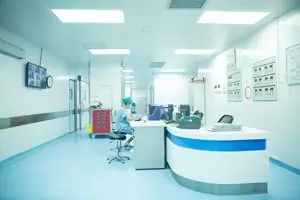
Inside the department: a controlled environment where children are cared for before and after transplantation.
More Than 900 Transplants: What the Numbers Show
Since the department was established, its teams have completed more than 900 haematopoietic stem cell transplants, and they now perform around 100 each year. Behind those totals are patterns that matter to families deciding where to seek care.
Three areas account for more than half of all transplants: HLH, chronic active Epstein-Barr virus infection, and primary immunodeficiency. These are precisely the diseases that most centers encounter only rarely.
The department has performed more than 100 transplants for refractory or relapsed HLH, nearly 50 for chronic active EBV infection, and nearly 100 for primary immunodeficiency. More than 80 percent of the children treated are high-risk cases. New chemotherapy and targeted regimens have allowed many children with progressive disease to reach remission and then become eligible for transplantation — a second chance that did not previously exist.
Very young patients are another area of depth. Ten children transplanted here were under one year old, and 32 were between one and two years old. The youngest transplant recipient was just two months old; the youngest stem cell donor was nine months old. The department has also transplanted children with severe congenital diseases such as Wiskott-Aldrich syndrome, leukocyte adhesion deficiency type I, pyruvate kinase deficiency anaemia, Gaucher disease, mucopolysaccharidosis, severe combined immunodeficiency, leukodystrophy, and inflammatory bowel disease.
Repeated transplantation is possible when a first transplant fails or the disease returns. By late 2025 the team had completed a third stem cell transplant for a fourth child, and had performed the 14th transplant for PI3K-delta activation syndrome caused by a PIK3CD mutation.
Fertility preservation has also become part of the plan for older children. Before transplantation, ovarian tissue can be removed and stored, so that a girl who survives her disease keeps the option of having children later. By the end of 2025, the department had completed 59 ovarian tissue cryopreservation procedures.
Milestones Along the Way
What This Means for Families Coming from Abroad
For families travelling to Beijing, two practical questions usually come first: how quickly a donor can be found, and whether the child can be assessed before the journey.
The department can identify a suitable donor within about 14 days, drawing on the China Marrow Donor Program and international registries. For children who cannot travel immediately, the international team can review medical records and imaging remotely and give an opinion on diagnosis and treatment options. The hospital also has a dedicated international inpatient area with family rooms, so a parent can stay with the child throughout treatment.
When to Ask for a Specialist Opinion
Consider seeking an evaluation at a specialist pediatric hematology center if your child has a blood count that stays abnormal without a clear explanation, repeated or unusually severe infections, an enlarged liver or spleen, unexplained bruising or bleeding, persistent fever that does not resolve, a diagnosis of HLH, chronic active EBV infection, or any inherited immune or metabolic disorder, or a blood cancer that has relapsed or stopped responding to treatment. A second opinion is not a delay — it often clarifies which treatment is right.
About the Hematology Team
Professor Sun Yuan
Hospital Director; Head of Hematology and Oncology, Beijing Jingdu Children's Hospital
Professor Wu Minyuan
Distinguished expert with State Council Special Contribution; specialist in pediatric blood disorders
The department's medical and nursing teams work together with the central laboratory, the transplant units, and the intensive care team. For families facing a rare diagnosis, this arrangement means that the people who interpret the tests, decide the treatment, and care for the child at the bedside are part of one team.
← Back to News