About the 31st Congress of the Chinese Pediatric Society
From 22 to 25 October 2026, the 31st Congress of the Chinese Pediatric Society (NCCPS 2026) convened in Changsha, Hunan. Organised by the Chinese Medical Association, it is regarded as the most influential pediatric academic gathering in the country: specialties from neonatology and hematology to surgery, imaging and nursing meet in one place, and the programme runs on keynote lectures, symposia, oral presentations and poster sessions.
For a hospital, the congress is a useful mirror. It shows not only what a team has treated, but what it has been able to measure, follow up and write down.
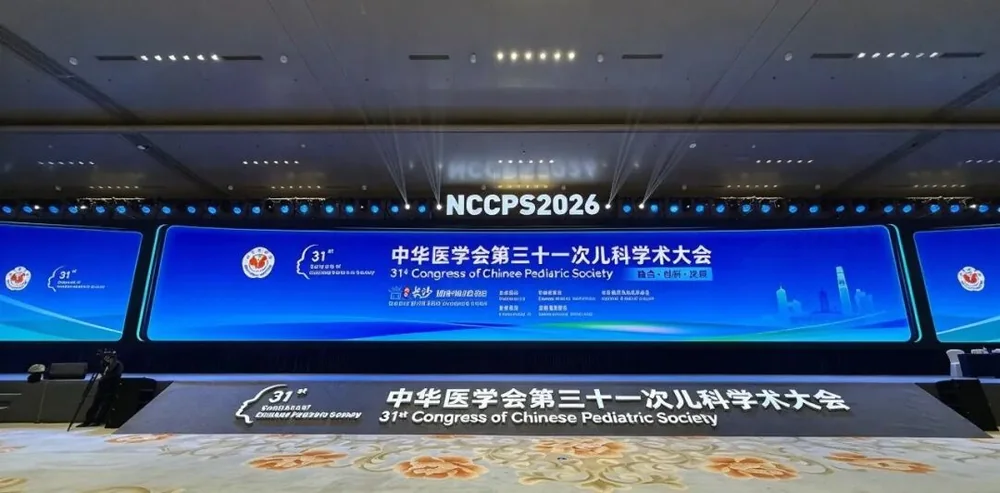
The main hall in Changsha ahead of the opening session of NCCPS 2026.
A Multidisciplinary Footprint
Jingdu's accepted work came from twelve departments: Allergy & Immunology, Respiratory Medicine, Gastroenterology, Hematology, Hematology & Solid Tumor, Cardiothoracic Surgery, Ophthalmology, Dentistry, ENT–Head & Neck Surgery, Medical Imaging, Function Testing and the International Patient Clinic. Between them they cover common childhood illness, complex disease and rare disease.
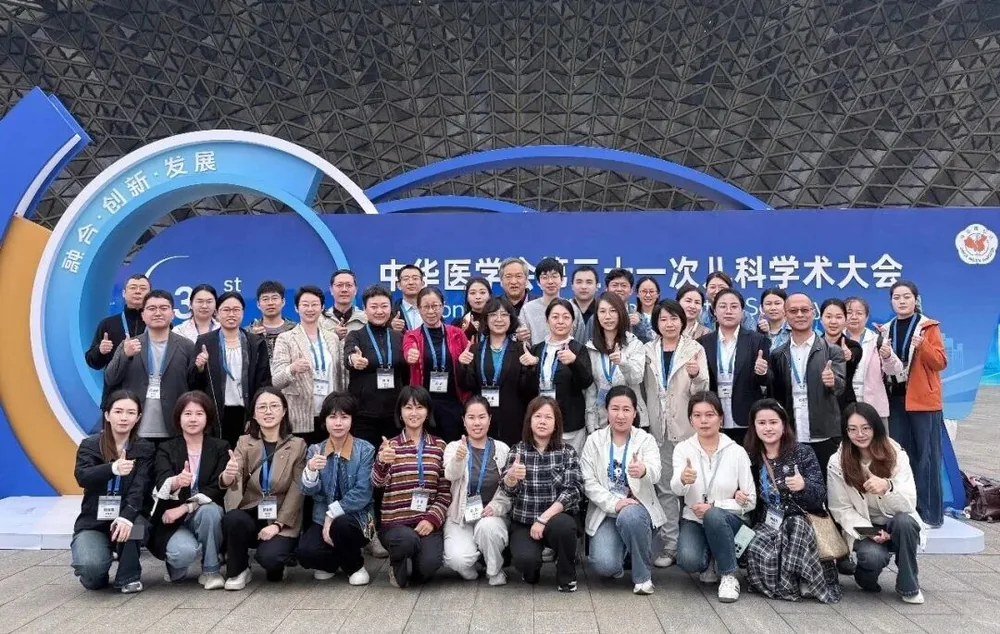
The Jingdu team outside the congress venue in Changsha.
On the Main Stage: Twelve Oral Presentations
Twelve abstracts were selected for oral presentation. They ranged from a single, hard-won case report to series of more than a hundred patients.
Allergy & Immunology: Anaphylaxis and a Diagnostic Detour
Dr. Zheng Chengzhong, Director of Allergy & Immunology, spoke on the practical difficulties of on-the-spot self-rescue and bystander rescue during severe anaphylaxis in children — a problem that sits as much in public awareness and first-aid training as in the clinic itself. Dr. Qiao Bingyu followed with a case report titled “A Familiar Clinical Picture, an Unfamiliar Answer”, tracing the detours of a tuberculosis diagnosis that did not follow the expected script.
Ophthalmology: Ten Years After Congenital Cataract Surgery
Dr. Liang Tianwei, Director of Ophthalmology, reported a ten-year follow-up of visual outcomes after congenital cataract surgery. Long-term follow-up is where pediatric ophthalmology is won or lost: the operation is a beginning, and refractive management, amblyopia therapy and monitoring for secondary glaucoma determine what a child can actually see a decade later.
Hematology & Transplantation: Three Studies
Three oral papers came from the hematology and transplant teams.
- Dr. Chen Jiao (International Patient Clinic) — hematopoietic stem cell transplantation for X-linked agammaglobulinemia complicated by intestinal failure, presented as a single case.
- Dr. Yan Bei (Hematology) — a single-centre experience and comparative analysis of allogeneic transplantation for therapy-related myeloid neoplasms arising after treatment of a childhood solid tumor.
- Dr. Liu Yukai (Hematology & Solid Tumor) — a low-dose differentiation-based chemotherapy regimen for relapsed or refractory neuroblastoma, with a retrospective analysis of 130 cases.
Gastroenterology: Microbiota Transfer in Autism With GI Symptoms
Dr. Li Jing, Director of Gastroenterology, presented a 276-case analysis of faecal microbiota transplantation for children with autism spectrum disorder who also have gastrointestinal symptoms. It is one of the larger pediatric series reported in this field, and it addresses a question families ask constantly: when a child's gut symptoms and behavioural symptoms travel together, can treating the gut change anything?
Respiratory Medicine: Lung Ultrasound First
Dr. Zhao Lei reported the clinical features of children with Chlamydia pneumoniae pneumonia when chest ultrasound, rather than chest X-ray, is used as the initial imaging method — part of a broader shift toward radiation-free imaging in pediatrics.
Cardiothoracic Surgery: Safer Handover After Heart Surgery
Ms. Gao Haitao, head nurse of Cardiothoracic Surgery, presented work on building a resilient safety system for the in-hospital transport of children after congenital heart surgery — moving the framing, as the title puts it, from “carrying” a patient to “escorting” one.
Dentistry: Standardising Sedation and Isolation
Ms. Hu Yan, head nurse of Dentistry, presented a standardised four-handed technique protocol for rubber dam isolation in pediatric dentistry; Dr. Yang Yanhong presented on the outcomes of standardised nursing in nitrous oxide–oxygen sedation for children receiving dental treatment. Both papers address the same barrier that keeps children out of the dental chair: fear, and the safety systems required to treat through it.
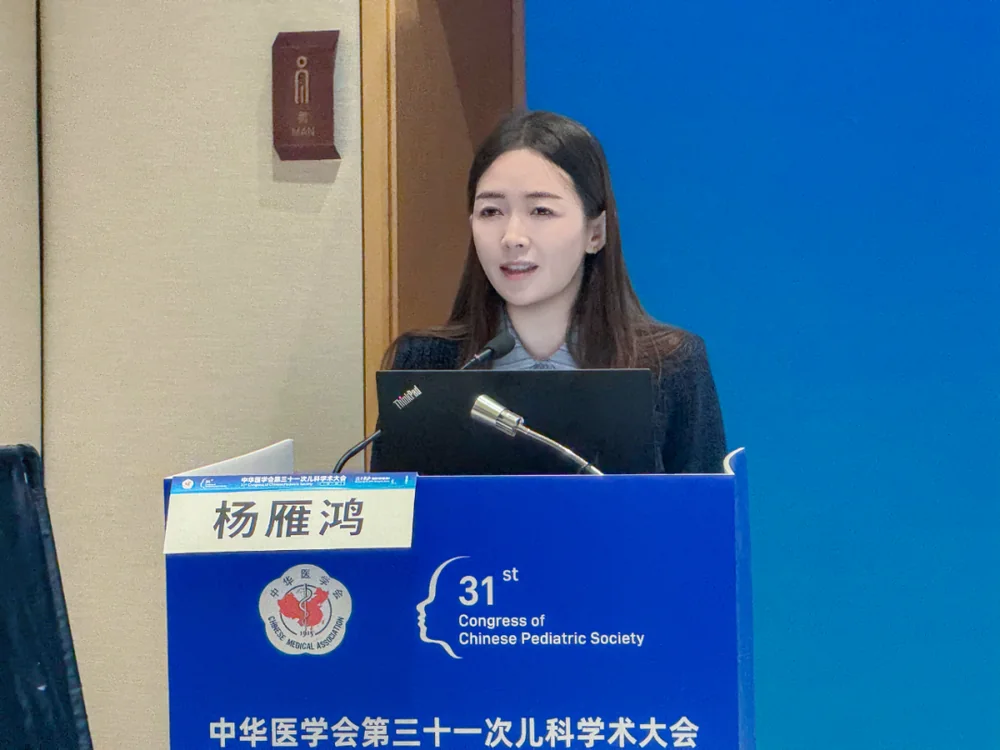
Dr. Yang Yanhong of Dentistry presenting during an oral session at NCCPS 2026.
Function Testing: What Swallowed Objects Look Like on Ultrasound
Dr. Kong Xiaobei analysed the ultrasound features of the foreign bodies children most often swallow — coins, button batteries, magnetic objects — where the imaging finding determines whether a child goes to the operating room within hours or can be watched.
Poster Session: Seven More Studies
Seven abstracts were accepted as posters, covering transplantation, orthopedics and ENT, dentistry, cardiology, ophthalmology and radiology.
- Dr. Chen Jiao (International Patient Clinic) — Clinical Characteristics and Hematopoietic Stem Cell Transplantation Prognosis in Shwachman-Diamond Syndrome: A Report of 140 Cases From a Single Centre, presented in English.
- Dr. Sun Fengwei (ENT–Head & Neck Surgery) — a case of atlantoaxial subluxation in a child who first presented with earache, a reminder that ear pain is not always an ear problem.
- Dr. Hao Lijing (Dentistry) — the efficacy of nitrous oxide–oxygen inhalation sedation in primary molar root canal treatment for children with dental anxiety.
- Dr. Zhao Zhenghan (Hematology & Solid Tumor) — bioinformatics-based screening and validation of key genes in intravenous immunoglobulin-resistant Kawasaki disease.
- Dr. Li Hongyu (Ophthalmology) — from removal to preservation: globe-sparing treatment of severe infectious corneal ulcer in a child.
- Dr. Li Yanmei (Ophthalmology) — clinical course of infectious corneal ulcer caused by Pseudomonas aeruginosa in a child with autism.
- Dr. Tang Guiye (Medical Imaging) — the clinical value of X-ray in assessing adenoid hypertrophy of the nasopharynx in children.
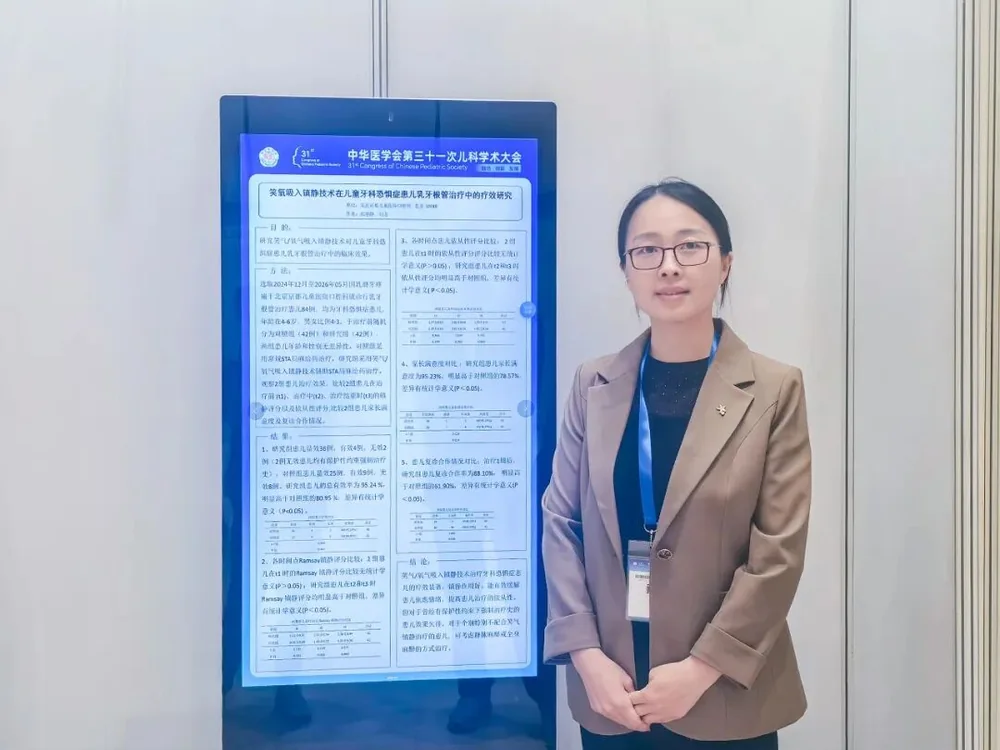
A Jingdu dentist at her poster on sedation-assisted root canal treatment for children with dental anxiety.
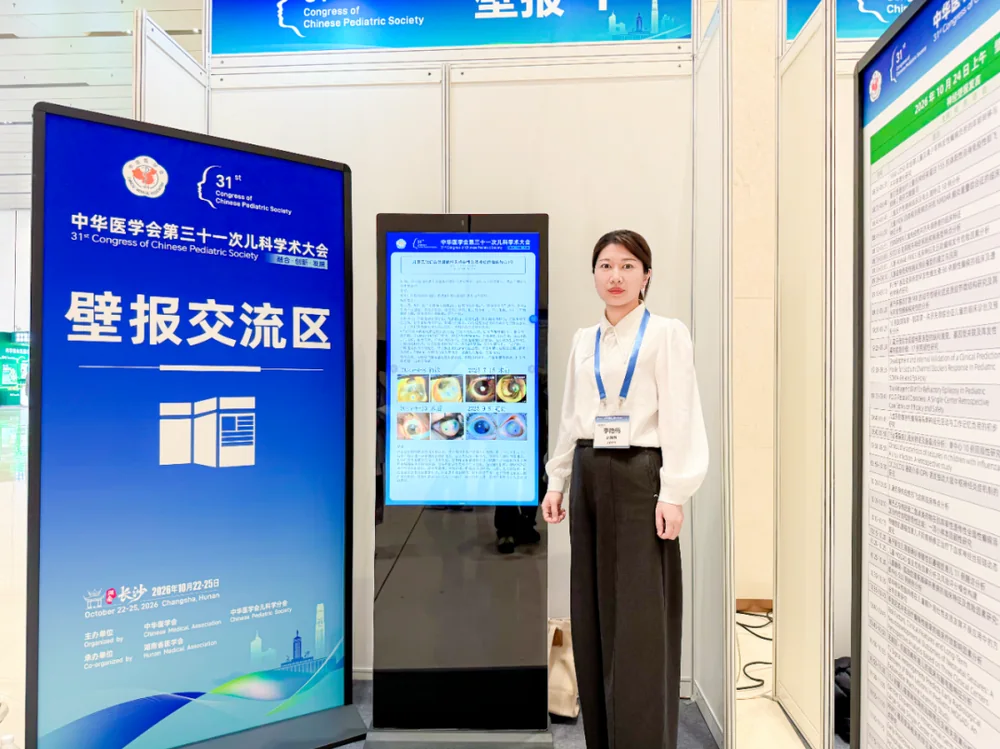
The poster exchange area, where Jingdu's seven accepted posters were displayed.
What Nineteen Abstracts Actually Mean
Submission counts are not a clinical outcome, and a poster is not a cure. What the list shows is a pattern: the same hospital reporting on a 140-patient transplant cohort and on a single child with an unusual corneal infection; on a 130-case neuroblastoma series and on how a nurse hands a child over between theatre and intensive care.
That range is deliberate. Jingdu's clinical model puts hematology and stem cell transplantation at the centre, then builds the supporting specialties — imaging, function testing, dentistry, ophthalmology, ENT, respiratory, gastroenterology, intensive care — around the same children, because a child with a rare disease rarely needs only one of them.
The through-line: research questions at Jingdu are expected to come from the ward. A difficult diagnosis, an unexpected complication, a family's unanswered question — each is a study waiting to be written, and the congress is where those studies are tested against the experience of peers across the country.
Looking Forward
Beijing Jingdu Children's Hospital describes its mission as caring for each child as “the pearl in the palm” — timely, correct and warm care. The academic programme is meant to serve that mission rather than sit apart from it: the point of measuring outcomes, following children for ten years and publishing what was learned is that the next child with the same diagnosis gets a better answer.
← Back to News