The Diagnosis That Changed Everything
At just over one year old, Yaoyao (pseudonym) was at the age's most joyful stage — learning to walk, starting to babble. But her mother noticed something worrying: the child's right eye occasionally appeared to drift inward.
At first, the family assumed it was a minor developmental issue common in young children. But when they took her to a local hospital, the ophthalmologist's expression changed immediately. Shining a light into Yaoyao's eye, the doctor saw it: a cold white reflection from the pupil — leukocoria, the classic "white pupil" sign of retinoblastoma.
Retinoblastoma is the most common intraocular malignancy in early childhood. If not treated promptly, it can cause blindness — and in advanced cases, it can be life-threatening. The "white pupil" (leukocoria) sign occurs when light reflects off the tumor inside the eye, rather than the normal red reflex.
The local doctor's words were heavy: "It's highly suspected to be retinoblastoma — also known as 'eye cancer.'" In an instant, the family's world collapsed.
A Desperate Journey to Beijing
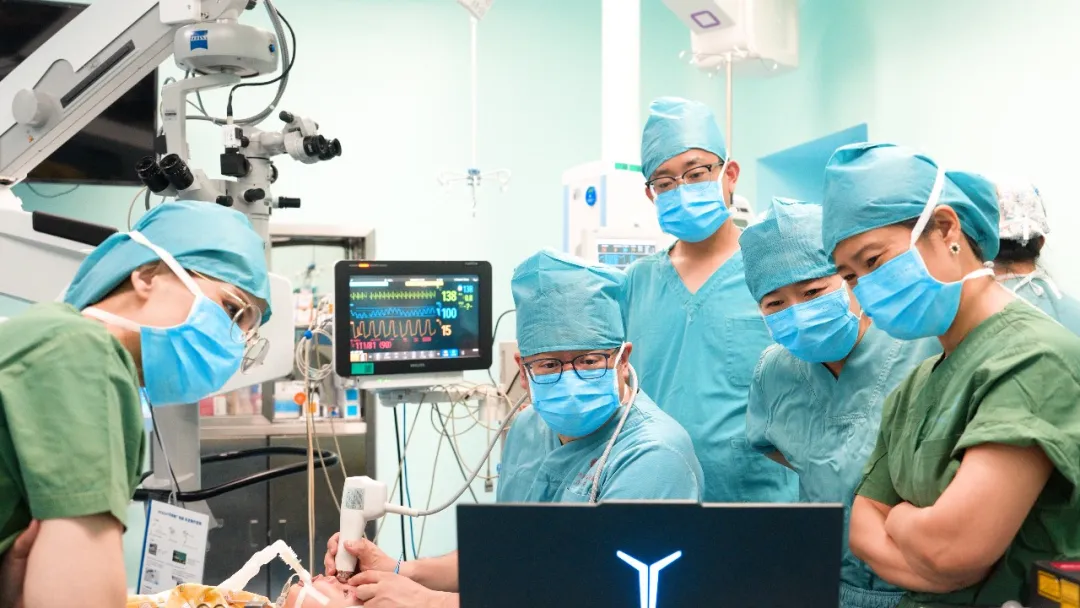
The family rushed to Beijing overnight. At a major hospital, further tests delivered another blow: Group D retinoblastoma — the tumor was large, the retina was detaching, and eye preservation would be extremely difficult. Worse, an eye infection at the time meant even surgery wasn't immediately possible.
Was enucleation (eye removal) the only option?
Refusing to give up, Yaoyao's parents searched everywhere and finally found a glimmer of hope: the Solid Tumor Unit at Beijing Jingdu Children's Hospital had extensive experience in comprehensive eye-preserving treatment for retinoblastoma.
Multidisciplinary Treatment: Three-Pronged Approach
Led by Prof. Tang Suoqin, Prof. Zhang Jinhua, and Director Liu Hongyan, the solid tumor team designed a phased treatment plan for Yaoyao:
Three cycles of chemotherapy to initially control tumor growth.
Performed by Director Liang Tianwei's ophthalmology team to precisely destroy residual tumor foci.
Two additional cycles to prevent tumor recurrence.
After laser treatment, imaging assessment showed: the tumor had significantly shrunk compared to initial presentation, and the retina remained stable. Eye preservation had gone from "nearly impossible" to "achievable."
Precision Strike: Intra-arterial Chemotherapy
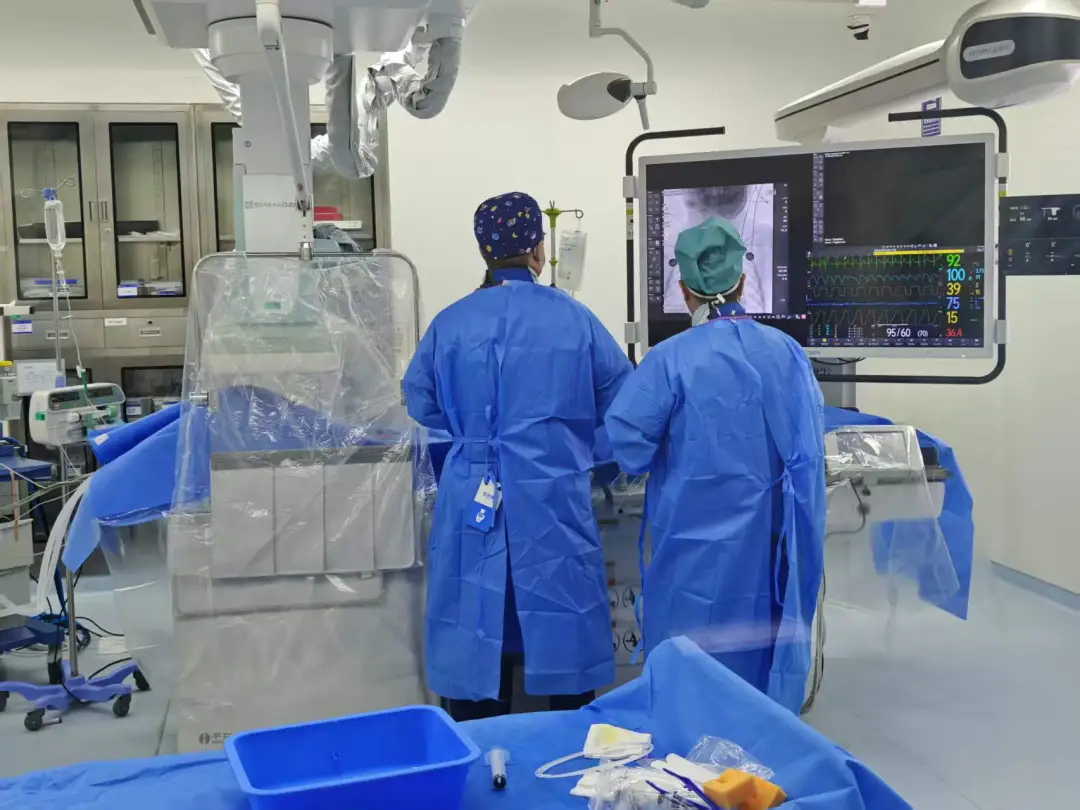
To completely clear residual tumor cells while minimizing the side effects of systemic chemotherapy, the solid tumor team, interventional vascular team, and anesthesiology team jointly decided to perform a more precise local treatment — intra-arterial chemotherapy (ophthalmic artery chemosurgery).
"It's like delivering chemotherapy drugs directly to the tumor through a dedicated tunnel," explains Dr. Liu Yukai. "Local drug concentration can reach dozens of times that of systemic chemotherapy, while side effects are significantly reduced." During the procedure, carotid angiography and venography are also performed to ensure precise catheter placement in the arterial branch supplying the eye.
The procedure was delicate and required extreme precision:
- The anesthesiology team tailored a sedation plan for 1-year-old Yaoyao to ensure safety throughout the procedure.
- The interventional team accessed the femoral artery and guided a catheter thinner than a human hair through the blood vessels under X-ray guidance.
- The catheter was precisely positioned at the entrance of the right ophthalmic artery.
- Chemotherapy drugs were slowly infused directly into the tumor's blood supply.
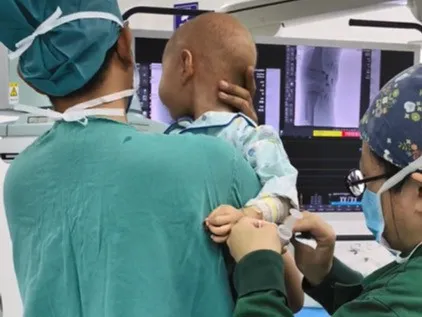
The surgery was successfully completed. The next day, Yaoyao was eating and playing normally. Her eyes remained bright and clear.
"We thought the eye couldn't be saved… Every step of the treatment was explained clearly to us. The doctors let us see light in our despair."
Today: Eyes Full of Light
Today, Yaoyao's eyes are still clear, bright, and full of curiosity about the world. She can see, she can play, and she still has both of her eyes.
According to Dr. Liu Yukai, retinoblastoma treatment has entered an era where "eye preservation is the priority." Even in Group D and some Group E cases, through multimodal combined treatment — systemic chemotherapy, ophthalmic artery intervention, and laser therapy — there is a good chance of preserving the eyeball and useful vision.
A Message to Families Facing Retinoblastoma
If your child has been diagnosed with retinoblastoma, do not lose hope. A multidisciplinary approach combiningsystemic chemotherapy, intra-arterial chemotherapy, laser therapy, and other modalities offers many children a chance to keep their eye and their sight.
At Jingdu Children's Hospital, we treat every child with the principle of "precision, minimally invasive, and humanistic care." We are committed to protecting every child's window to the world.